Why multi-plant feed manufacturers outgrow their desktop ERP
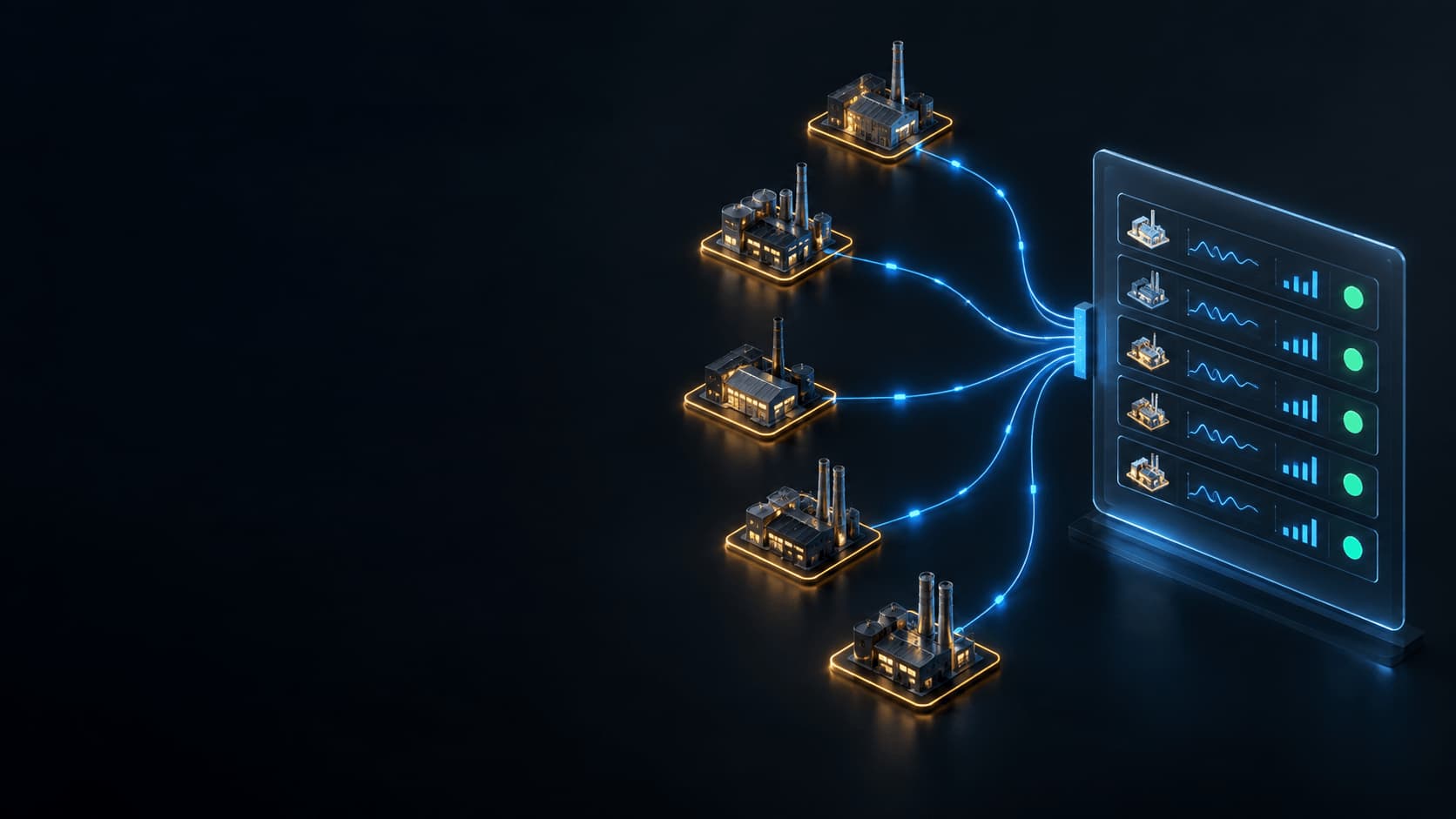
Why multi-plant feed manufacturers outgrow their desktop ERP
The 60-second version
- A desktop ERP does not fail loudly. It just stops being able to answer questions about more than one plant at a time.
- The costliest gap is between the yard and the ledger. When gate weight, lab result, and supplier payment live apart, you pay for quality you did not receive.
- One shared record fixes more than reporting. Deductions get enforced, credit gets checked before dispatch, and finance stops waiting for month end.
- This is a solved problem. Kapila Krishi Udyog Ltd now runs five cattle feed plants on a single cloud ERPNext instance, described in full further down.
A truck pulls onto the weighbridge at 6 AM. Its load is weighed, sampled, and unloaded. The driver gets a receipt and leaves.
Somewhere else in the plant, a lab enters the quality result on a sheet. Later, in a third place, someone works out what the supplier should actually be paid once the grade and moisture figures are applied. Three events, three records, and a person in the middle stitching them together every single day.
For one plant that stitching is manageable. Add a second plant, then a third, and the seams start to cost you money.
01
Where a desktop ERP breaks down as you grow
Desktop ERPs were built for a single location. They keep records on local machines, which means the moment you add a second plant, you have two separate databases with no live connection between them. The consolidated picture you need to run the business does not exist anywhere in either system.
Feed and agri-commodity manufacturers feel this more acutely than most because the business has unusually tight seams between physical and financial events. Quality at intake directly determines what is paid. Gate movement determines what is in stock. Dealer credit determines what is dispatched. When those three things live in separate systems, every decision that touches more than one of them requires a person to close the gap manually.
What "manual" actually costs
It is not just the time. Manual reconciliation between systems introduces errors that are hard to trace. Overpayment on substandard raw material. Stock numbers that do not match what is in the warehouse. Dealer credit extended beyond the limit because the sales team could not see the current balance at the time of booking. In a commodity business where margins are thin, each of those is a direct hit to profitability.

The cost of disconnection
- Overpayment on substandard raw material
- Stock figures that lag behind the warehouse
- Dealer credit extended past the safe limit
- Finance reconciliation done days after the fact
- Decisions waiting for someone to assemble numbers
What a connected system changes
- Deductions enforced at the point of payment
- Stock updated at the gate, visible everywhere
- Credit checked live before any order confirms
- Finance reads a live position, not a lagged report
- Numbers are there when the question is asked
02
The most expensive gap: gate to payment
In feed manufacturing, the most costly disconnection is between what arrives at the gate and what the supplier gets paid. Raw material intake involves three facts that should be one record: the physical weight at the weighbridge, the quality assessment from the lab, and the price after deductions are applied.
When those three facts live in separate places, the system that processes the payment does not know what quality was actually received. A supplier invoice comes in for the full amount. Someone manually checks the lab sheet, works out the deduction, notes it somewhere, and eventually gets the revised figure to accounts. In the meantime the payment may already have been made, or the supplier disputes the deduction because there is no system-generated audit trail behind it.
This is not a rare edge case. It happens on every intake, at every plant, every working day.

The fix is not more paperwork. It is one record.
When a vehicle arrives, its gate entry opens a purchase token. The weighbridge reading goes onto that token. The lab result goes onto that token. The system applies the quality deduction rule automatically and calculates the actual payable amount. Payment cannot be released until the gate entry, the receipt, and the quality check all sit on the same record and agree with each other.
The deduction is enforced by the system rather than reconciled by a person. The audit trail is complete from the moment the truck arrives.

03
What changes when all your plants share one system
Connecting procurement and payment is the most urgent fix, but it is not the only one. The same principle applies across every function once you move all plants onto one shared cloud instance.

Stock and production become one live view
On a desktop ERP, stock at Plant 01 and stock at Plant 02 exist in two separate databases. The only way to see a consolidated picture is to export both and add them up. On a shared cloud instance, every warehouse at every plant feeds the same stock ledger.
- Warehouse-wise stock visible in real time across every plant, so planning and dispatch use the same numbers at the same moment.
- Production status readable from one screen, so a shortfall at one plant can be covered from another without a phone call to check availability.
- A new plant joins the same instance, not a new island that needs its own reconciliation process.
| Plant | Warehouse | Raw material | Finished goods | Utilisation |
|---|---|---|---|---|
| Plant 01 | WH-01 Main | In stock | In stock | |
| Plant 02 | WH-02 Main | In stock | Low | |
| Plant 03 | WH-03 Main | In stock | In stock | |
| Plant 04 | WH-04 Main | Low | In stock | |
| Plant 05 | WH-05 Main | In stock | In stock |
Dealer credit stops being a blind spot
In a distribution network spanning hundreds of dealers, outstanding balances move fast. A sales team booking an order without a live credit position is making a decision on data that could be days old. By the time the books catch up, the exposure is already done.
- Live dealer ledger balance at order booking, so the credit check happens before the order is confirmed, not after the truck has left.
- Credit limit enforced by the system, not by a phone call to accounts before dispatch.
- GST-compliant invoices and e-Waybills generated at dispatch, not as a separate manual step that runs behind the truck.
Finance sees one live position, not a monthly assembly
When each plant runs its own books, a consolidated financial position is something someone builds at month end. Any decision that needs a current picture - payables exposure, cash position, receivables aging - requires waiting for that person's report.
- Payables, receivables, GST, and bank position consolidated across all plants in one view that is current at the moment it is opened.
- Bank reconciliation runs against the consolidated position, not against plant-level spreadsheets that need to be merged first.
- Role-based access by function and by plant so each person sees what they own and controls hold without depending on who shared what file.
| Advice | Plant | Supplier | Deduction | GRN check | Status |
|---|---|---|---|---|---|
| BPA-2041 | Plant 01 | Supplier A | Applied | Matched | Ready to pay |
| BPA-2042 | Plant 03 | Supplier B | Applied | Matched | Ready to pay |
| BPA-2043 | Plant 02 | Supplier C | Applied | Short qty | On hold |
| BPA-2044 | Plant 05 | Supplier D | Pending lab | Matched | Awaiting quality |
| BPA-2045 | Plant 04 | Supplier E | Applied | Matched | Ready to pay |
04
How Kapila Krishi Udyog Ltd solved this across five plants
Kapila Krishi Udyog Ltd, one of North India's leading cattle feed manufacturers, was running exactly this situation: five plants, five desktop ERPs, no shared view of procurement, quality, stock, or finance.
Gate entries were logged in physical registers with no link to purchase orders. Lab deductions on raw material were calculated by hand and applied manually to supplier payments. Sales teams had no live view of dealer credit. Finance consolidated across plants after the fact, usually by phone and spreadsheet.
Auriga IT built a centralised ERPNext implementation connecting all five plants on one cloud instance. The core workflows were: gate-to-warehouse vehicle entry linked to purchase orders, a Lab Deduction Rule that calculates quality adjustments automatically and holds payment until receipt and quality agree, a Bill Pass Advice workflow that routes every supplier invoice through verification before payment is released, real-time dealer credit checks at order booking, and consolidated finance across all plants with direct bank reconciliation.
The result: management now reads live numbers across all five plants from one screen. The people who used to spend their days assembling that picture do not have to any more.
Our team is pleased with the new era solution. The team is active as our own team rather than a client vendor - they have been pushing us to go live.
Saurabh Shivhare, Co-Founder Badho · CEO Kapila AgroThe full case study covers every workflow, the specific mechanisms built, and the technology stack in detail.
05
What to look for before you implement
Not every ERP that claims multi-plant support actually delivers one connected record. Before you commit, here are the questions that matter.
Can a transaction be traced from the physical event at the gate to the financial entry in the books without leaving the system? If yes, you have one record. If not, you have integration.
Does the system stop payment being released before receipt and quality agree? If a user can skip the quality step, the control is not real.
Is the consolidated stock and finance position available right now, or does it update on a schedule? Lagged data is just a slower version of the phone call it was meant to replace.
Is it one shared cloud instance or separate databases that sync periodically? Periodic sync means periodic gaps. One instance means no sync needed.
Can a new plant be added to the same instance without a new implementation project? If adding a plant means rebuilding, the architecture is wrong for your business.
Are GST invoices and e-Waybills generated inside the dispatch workflow, or do they require a separate step? A separate step is a separate gap.
06
Frequently asked questions
Why does a desktop ERP stop working for multi-plant feed manufacturing?
A desktop ERP keeps records on local machines at each plant. There is no shared view of stock, procurement, or finance across sites, so a consolidated picture has to be assembled manually. At one plant this is manageable. At five, the lag becomes a decision bottleneck and the reconciliation effort becomes a full-time job in itself.
What is the biggest operational risk when gate entry is not linked to procurement?
When gate entry, quality assessment, and supplier payment sit in separate systems, a business can pay the full invoice for raw material that failed a quality check, or hold a legitimate payment because the paperwork chain is broken. In a commodity business with thin margins, both outcomes directly hit profitability, and they happen on every intake at every plant.
How does a connected ERP handle quality deductions on raw material?
A connected system links the lab result directly to the purchase order. When quality parameters are entered, the system calculates the price deduction automatically and withholds payment until receipt and quality agree. The deduction is enforced by the system rather than reconciled after the fact by a person, and the audit trail is complete from the moment the truck arrives.
Can ERPNext run across multiple manufacturing plants from one instance?
Yes. A single cloud ERPNext instance can serve multiple plants with warehouse-wise stock, plant-level production, consolidated finance, GST compliance, and role-based access by site and function. Kapila Krishi Udyog Ltd, a North India cattle feed manufacturer, runs all five of its plants on one shared ERPNext instance built by Auriga IT.
What should a feed manufacturer look for in an ERP?
One record per transaction traceable from physical event to financial entry, controls that stop steps happening out of sequence, automated quality deduction rules, consolidated finance across all plants, GST and e-Waybill compliance inside the dispatch workflow, and a cloud deployment that all plants share without local installation. The presence of all six is the difference between a connected system and a collection of modules.
How long does a multi-plant ERPNext implementation take?
It depends on the number of custom workflows and the complexity of existing data. Engagements covering procurement, quality, sales, stock, and finance across multiple plants typically run two to four months. The Kapila Krishi Udyog Ltd implementation connected all five plants including custom gate pass, quality deduction, and Bill Pass Advice modules.
Running more than one plant on disconnected systems?
Read the full Kapila Krishi Udyog Ltd case study to see exactly how Auriga IT connected five plants on one ERPNext instance - or start a conversation about your own operation.
Related content

Auriga: Leveling Up for Enterprise Growth!
Auriga’s journey began in 2010 crafting products for India’s [...]