- Featured Case Studies
- Digital Products & Software
Measuring WhatsApp Pay’s Speed Against Google Pay, PhonePe and Paytm
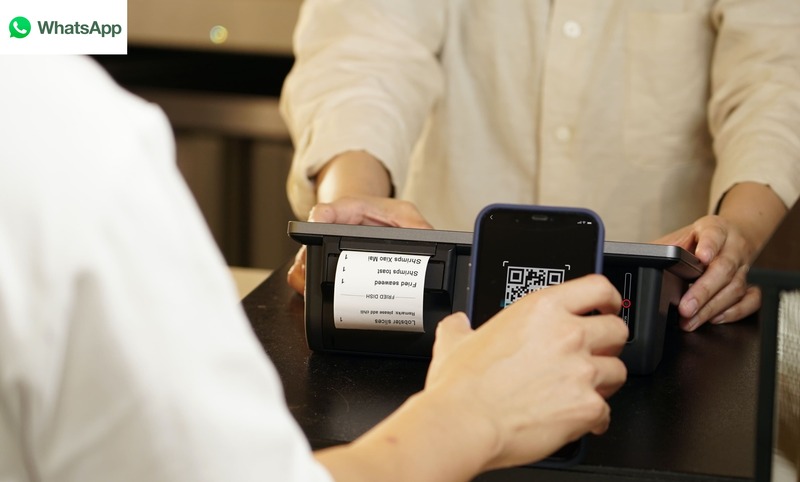
Measuring WhatsApp Pay’s Speed Against Google Pay, PhonePe and Paytm
A New Entrant in a Crowded Market
Payment latency is one of the clearest differentiators in a UPI app. A transaction that completes a second or two faster, or a QR scanner that locks on more reliably, directly shapes whether a user sticks with an app or switches. WhatsApp Pay needed to know precisely where it stood on each step of the payment journey, against each competitor, under the messy real-world conditions Indian users actually face.
Measuring Real-World Payment Speed at Scale
An Automated Benchmarking Engine
Automated Test Scripts Simulating Real Users
Auriga's team wrote Java automation scripts that mimicked how a person actually moves through a payment, capturing load time at each page from the first screen to the payment completion status. The same scripts ran identically across WhatsApp Pay, Google Pay, PhonePe, Paytm, and Amazon Pay, so every app was measured on exactly the same basis.
- 1Identify the flows and pages where load latency needed to be captured.
- 2Write Java scripts that locate on-screen elements and record the load time for each step.
- 3Execute the scripts in bulk across many test configurations and conditions.
- 4Generate detailed timing reports covering the entire payment journey.
A Test Matrix Built Around Real Conditions
The team brainstormed the critical UPI user journeys - scan and pay, pick a QR code from chat, pay to a number - and the full set of variables that influence latency: telecom type, network type, first versus repeat transaction, scanning distance and angle, and device type. Bulk iterations were run across these combinations so the benchmark reflected the conditions Indian users actually encounter, not just ideal-case lab results.

QR Scanner Efficiency Under Varying Conditions
Beyond end-to-end payment time, Auriga measured how efficiently each app's built-in QR scanner performed. The team recorded the time taken to scan a QR code while systematically varying the angle from 0 to 50 degrees and the distance from 20 to 100 centimetres, revealing how robust each scanner was in the imperfect conditions of real use.

A Decision-Ready Analytics Dashboard
Auriga built a web-based dashboard for the WhatsApp Pay team to explore the benchmark results. It surfaced page-level loading time for each step of each user journey, set side by side against every major UPI app in India. Built-in filters let the team focus the analysis on a specific flow, condition, or competitor. Each transaction was visualised as a sequence of coloured steps, with the width of each block showing the time taken - making slow steps immediately visible.

How It Was Built
From Raw Timings to a Usable Benchmarking View
For Any Team Competing in a Latency-Sensitive Market
Any team competing in a data-driven, latency-sensitive market - payments, delivery, ride-hailing, or any app where a few hundred milliseconds shapes user choice - faces the same question WhatsApp Pay faced: how does our product actually perform against named competitors, under real-world conditions, not lab conditions. An automated testing framework that simulates real user journeys across every major competitor, captures step-level timing data, and visualises it in a filterable dashboard turns that open question into evidence a product team can act on, without needing a large in-house QA team to run it by hand.
Other Engineering Work by Auriga IT
Auriga IT delivers QA automation, performance engineering, data analytics, and custom platforms for fintech, manufacturing, and enterprise clients.
Questions About This Project
As a new entrant in India's UPI market, WhatsApp Pay needed objective data on how its end-user payment latency compared to Google Pay, PhonePe, Paytm, and Amazon Pay. Auriga IT built an automated system to measure and visualise that comparison across real-world conditions.
Auriga wrote Java automation scripts that simulate a real user moving through a payment, capturing the load time of each page from the first screen to the completion status. The same scripts run identically across every app, and results are stored and visualised so each step can be compared on equal footing.
WhatsApp Pay was measured against the major UPI apps operating in India: Google Pay, PhonePe, Paytm, and Amazon Pay.
The study controlled for telecom type, network type, first versus repeat transaction, scanning distance and angle, device type, and the specific user journey - scan and pay, pick QR from chat, or pay to a number. QR scanner efficiency was tested across angles from 0 to 50 degrees and distances from 20 to 100 centimetres.
The automation scripts were written in Java, timing data was stored in MySQL, and the interactive benchmark dashboard was built on Apache Superset and delivered through the web.
Yes. Auriga IT builds automated QA and performance benchmarking frameworks for fintech, e-commerce, and enterprise apps, along with the data pipelines and dashboards to make the results actionable. Get in touch to discuss your requirements.
Need Hard Data on How Your App Performs?
Auriga IT builds automated benchmarking and performance testing frameworks that measure your product against the competition the way real users experience it - then turn the data into dashboards your team can act on.
Talk to Auriga ITRelated content

Auriga: Leveling Up for Enterprise Growth!
Auriga’s journey began in 2010 crafting products for India’s [...]