Blogs

- Published On: 31 July 2024By Anshuman Sharma
This article explores JWT (JSON Web Token) authentication and OAuth, two popular mechanisms for secure information transmission and access delegation in web applications. JWT authentication is explained in detail, covering its three main components: header, payload, and signature. The article demonstrates how to implement JWT in a Django application using the djangorestframework-simplejwt package. OAuth is then introduced as an open standard for access delegation, commonly used for token-based authentication and authorization. The article outlines the key components of OAuth and provides a step-by-step guide for implementing OAuth in Django using the django-oauth-toolkit package. The trade-offs of both JWT and OAuth are discussed, highlighting their respective pros and cons. The article concludes by comparing JWT and OAuth, suggesting ideal use cases for each: JWT is best for stateless authentication, microservices architecture, and mobile/single-page applications. OAuth is ideal for authorization delegation, API access control, Single Sign-On (SSO), and third-party integrations. This comprehensive guide provides developers with the knowledge to choose and implement the most suitable authentication method for their specific use case.
- Published On: 29 July 2024By Divye Tela
तेज़ रफ्तार जिंदगी में अक्सर बचपन की सादगी पीछे छूट जाती है, गर्मी की छुट्टियां सिर्फ दूर की याद बनकर रह जाती हैं। क्या हो अगर वो जादुई लम्हें हम [...]

- Published On: 2 July 2024By Divye Tela
The last T20 World Cup that India won was in 2007, when Auriga IT was just an inception, the preparations were being done but it was just an idea/experiment. The [...]
- Published On: 28 June 2024By Ishan Jain
In the world of modern data visualization and monitoring, Grafana has emerged as a powerful tool, enabling users to create, share, and explore dashboards with ease. However, as organizations grow [...]
- Published On: 9 April 2024By Mohd Bilal
Title: A Millennial's Guide to Mastering API Automation Testing with Rest Assured Introduction In today’s fast-paced world of software development, ensuring the reliability and functionality of web applications is paramount. [...]
- Published On: 9 April 2024By urmila kumari
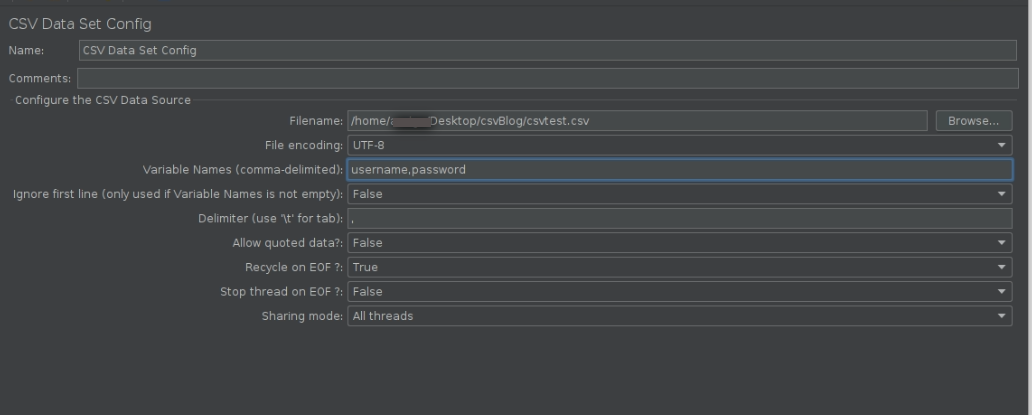
In JMeter ,users can use the CSV Data Set Config to read the data from an external source (CSV file) .By using CSV data set config, test plan can be [...]
- Published On: 15 March 2024By Hemant Singh
AWS Chalice - A Python Serverless Microframework for AWS Requirements: To use AWS Chalice, you will need A Python development environment. An AWS account Let's take a brief look. Technical [...]
- Published On: 6 March 2024By Sanket Agarwal
Introduction Apache Pinot stands out as a specialised, real-time distributed OLAP data-store designed for swift analytics, catering to high-volume, low-latency queries effortlessly handling data ingestion from diverse sources such as [...]
- Published On: 6 March 2024By mohammed aslam
Benchmarking is a process used by organizations to compare their performance metrics, processes, products, and services against industry standards or competitors in order to identify areas for improvement and best [...]
- Published On: 15 February 2024By Mohd Bilal
To get started first we need to review what are Cypress and Rest Assured Cypress.io Cypress is an open-source, end-to-end testing framework designed to simplify the process of testing web [...]
- Published On: 18 January 2024By prashant gupta
In a Low-Level Design (LLD) for a car rental system, we'll focus on the detailed design of specific modules and components. Let's elaborate on the LLD for key components: Car [...]
- Published On: 12 January 2024By Parikshit Rathore
In this blog, we will explore various optimization techniques in Django ORM such as subqueries, select_related, prefetch_related, and more. These methods not only guide us in consolidating multiple queries into [...]
Never Miss an Update
Stay in the loop with the latest stories, insights, and events from Auriga.